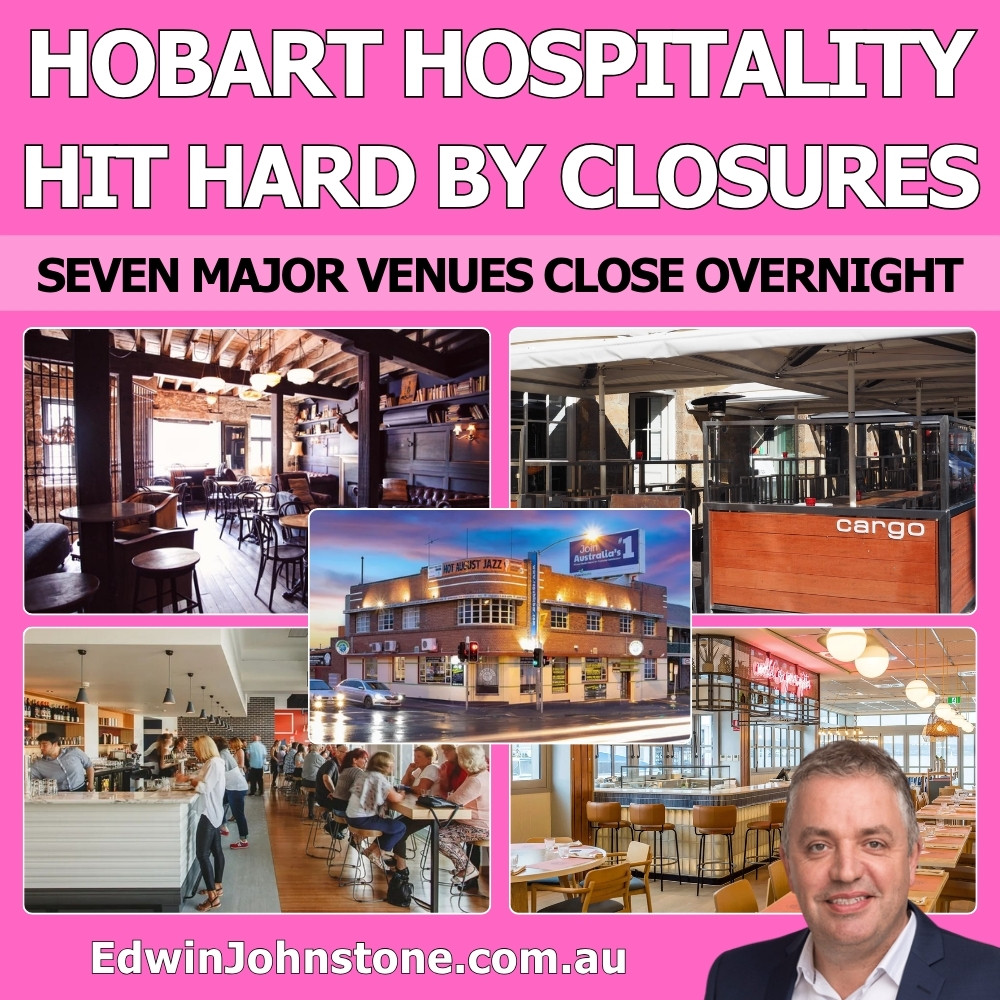
The sudden closure of seven well-known Hobart hospitality venues should be treated as a serious wake-up call for the city.
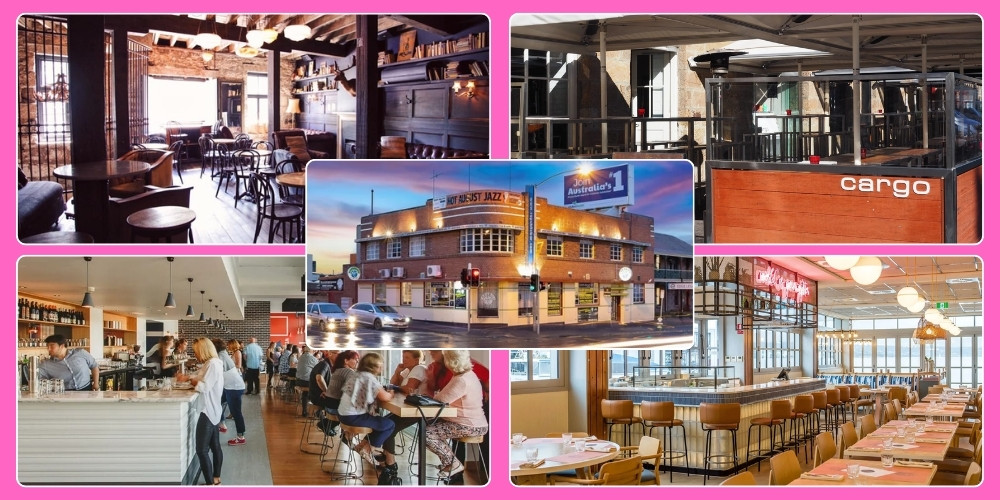
Cargo Bar, Jack Greene, Post Street Social, Observatory Bar, Republic Bar, Franklin Wharf Restaurant & Bar, and Franklin Wharf Function Centre are not minor venues on the edge of the economy. They are part of Hobart’s social life, visitor economy, waterfront identity, nightlife, and local business ecosystem.
When seven venues close their doors at once, the impact goes far beyond the businesses themselves. It affects staff who now face immediate uncertainty. It affects suppliers who may be owed money or lose important customers. It affects performers, security workers, cleaners, tradespeople, event organisers, and people with bookings.
The immediate priority must be the affected workers. More than 80 staff are reportedly impacted and deserve clear communication, practical support, and the best chance of being retained if the venues reopen under new ownership.
But we should not pretend this has happened in isolation.
Hospitality is under enormous pressure. Food and beverage costs have increased. Utilities have increased. Insurance has increased. Wages, compliance costs, rent, and finance costs have all added pressure. At the same time, many households have less discretionary money to spend.
Going out for dinner, drinks, or entertainment is often one of the first things people cut back on when household budgets are under strain. That creates a brutal squeeze for hospitality businesses. Costs go up, customers become more cautious, and businesses are still expected to maintain quality, service, staffing, and atmosphere.
For a city like Hobart, that should concern everyone.
Hospitality is not just about meals and drinks. It is a vital component of tourism, employment, the student economy, events, festivals, conferences, and the overall experience of the city. It gives people a reason to come into town, stay longer, spend money, and return.
If Hobart loses too much of that energy, the city becomes less attractive to visitors, residents, workers, and investors. That is why this cannot be seen only as a hospitality problem. It also points to bigger challenges around population, housing, and business confidence.
Businesses need people. They need workers, customers, students, visitors, families, and residents spending money in the local economy. Without people, there is no economy.
That does not mean growth without planning. Population growth must be matched with housing, transport, infrastructure, and services. Hobart already has serious housing affordability challenges, but the challenge is not to choose between housing and growth. It is to deliver both.
Hobart needs more housing in the right places, better use of underutilised sites, and practical planning decisions that support activity in and around the city. Transport decisions also need to make it easier for people to access Hobart, not harder.
Business confidence matters too. For small and medium businesses, extra costs, delays, and uncertainty can quickly become the difference between staying open and closing.
Hobart should be a city that backs business, supports workers, attracts visitors, and gives people more reasons to come in and stay.
That means taking the night-time economy seriously, supporting events and festivals, and encouraging more residents, activity, and confidence across the CBD, Salamanca, the waterfront, and North Hobart.
The closure of seven venues overnight is not just a hospitality story. It is a city story. It is about jobs, confidence, and the future of Hobart’s night-time economy.
I hope these venues are sold quickly, reopened, and once again become part of Hobart’s social and economic life. But I also hope this moment sparks a bigger conversation about the kind of city we want to be.
Hobart has enormous potential. With the right focus on people, housing, investment, access, and city activation, we can build a stronger, more confident, and more vibrant city.
Edwin Johnstone
Chair, Business Greater Hobart