The popularity of kunanyi is not a just problem to be solved, it is an opportunity to be managed writes Edwin Johnstone
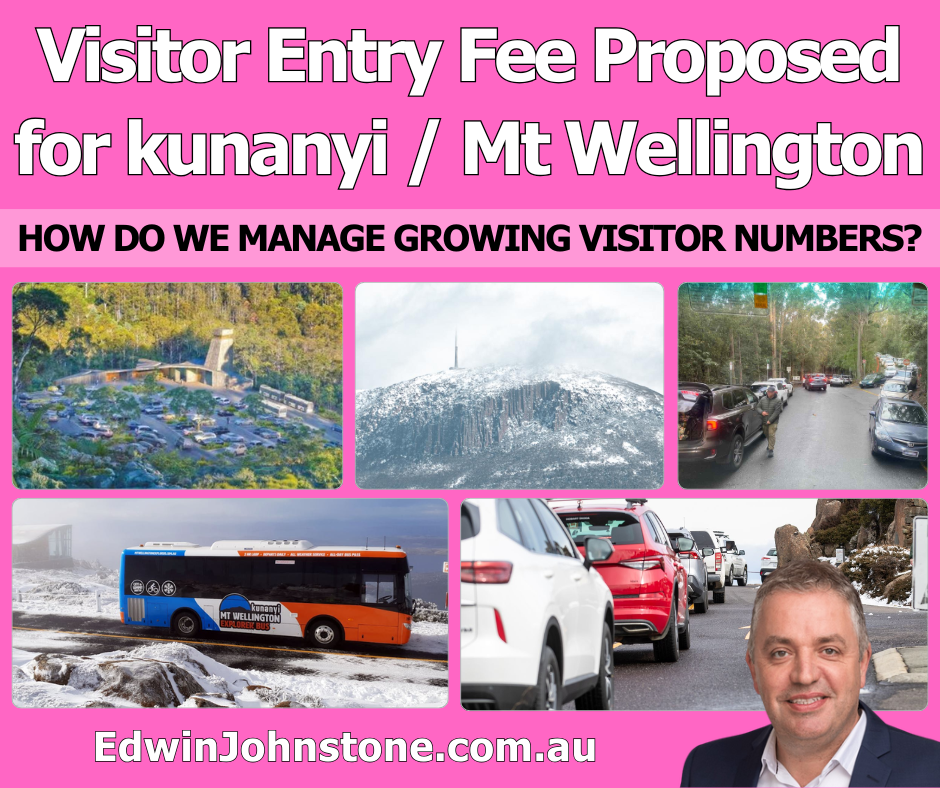
kunanyi / Mount Wellington is one of our greatest natural assets, attracting visitors year-round for its scenery, recreation and unique alpine environment. When snow falls, visitor numbers increase dramatically, exposing the growing strain on the mountain’s access and infrastructure.
That popularity is both a blessing and a challenge.
The City of Hobart recently announced it will crack down on illegal parking on the mountain during busy snow days. Public safety and emergency access must remain the priority. No one wants to see ambulances, police or fire crews delayed because roads have been blocked by vehicles parked in unsafe locations.
However, while enforcement may be necessary, you cannot “fine” your way out of the underlying problem: inadequate access to the mountain.
Every year we have the same conversation. Snow falls, visitor numbers surge, parking areas fill, roads become congested and frustration follows. We then debate parking enforcement until the weather changes, and the issue disappears for another year. But visitor numbers continue to grow.
kunanyi is not simply a mountain overlooking Hobart. It is one of Tasmania’s most visited natural attractions and an iconic part of our identity. For locals it is a place to walk, ride, run, picnic and connect with nature. For visitors it is often one of the first destinations they experience after arriving in Hobart.
As demand increases, we need to stop treating congestion as a seasonal inconvenience and plan for the future.
Whether through improved shuttle services, better traffic management, expanded visitor facilities or even a cable car, we need sustainable solutions that allow people to safely enjoy kunanyi while respecting its unique environmental and cultural values.
One proposal that deserves serious consideration is the Halls Saddle Mountain Gateway Precinct. The former quarry site at Halls Saddle has been identified as a potential transport hub and visitor gateway for the mountain. A park-and-ride facility, visitor centre and shuttle connections could help reduce congestion on the summit road while improving the overall visitor experience.
Importantly, this should not be viewed as an either-or debate. Better shuttle services, the Halls Saddle hub, redevelopment of The Springs, improved traffic management and even a cable car can all form part of a broader long-term access strategy. If we are serious about planning for the future, we should be willing to explore every practical option available.
Alongside transport improvements, the long-discussed redevelopment of The Springs should also be in the mix.
The Springs is one of the key visitor destinations on the mountain, yet its facilities no longer reflect the level of visitation it receives. Growing visitor numbers demand investment in infrastructure that improves the visitor experience while protecting the surrounding environment.
Better amenities, improved visitor facilities and thoughtful planning can help accommodate demand while reducing pressure on other areas of the mountain.
Importantly, we must also consider how these improvements are funded.
The Wellington Park Management Trust’s recommendation to explore access fees for kunanyi has understandably sparked debate. For many Hobart residents, the mountain is not simply a tourist attraction; it is a place they visit regularly and an important part of Hobart’s identity.
However, the conversation about funding should not be dismissed outright. If additional revenue can help fund improved facilities, environmental protection, transport solutions and visitor infrastructure, then it deserves consideration. The challenge is ensuring any system is fair.
If access fees are introduced, local Tasmanians should not be paying the same as interstate and international visitors.
Tasmanians already contribute to the maintenance of public infrastructure through taxes and rates. We support the services, roads and facilities that help make Hobart a great place to live and visit. Asking local residents to pay the same amount as tourists visiting for a few days would be difficult to justify.
A better approach would recognise the difference between locals and visitors. Any future access fee should be heavily discounted for Tasmanians, while interstate and international visitors make a greater contribution towards maintaining and improving one of Tasmania’s most significant attractions.
The key principle should be simple: local residents should continue to have affordable access to their mountain, while visitors make a reasonable contribution towards the infrastructure that supports their visit.
Ultimately, the debate about parking, access fees and transport infrastructure is about planning ahead.
Visitor numbers will continue to grow. The question is whether our infrastructure grows with them.
The popularity of kunanyi is not just a problem to be solved, it is an opportunity to be managed.
Edwin Johnstone
Chair, Business Greater Hobart