Published Mercury Newspaper
HOBART’S AGEING AND FRAGILE STORMWATER INFRASTRUCTURE URGENTLY NEEDS WIDESPREAD INVESTMENT, WRITES EDWIN JOHNSTONE
Last year, Hobart was given a blunt reminder of what happens when underground infrastructure is allowed to age out of sight and out of mind.
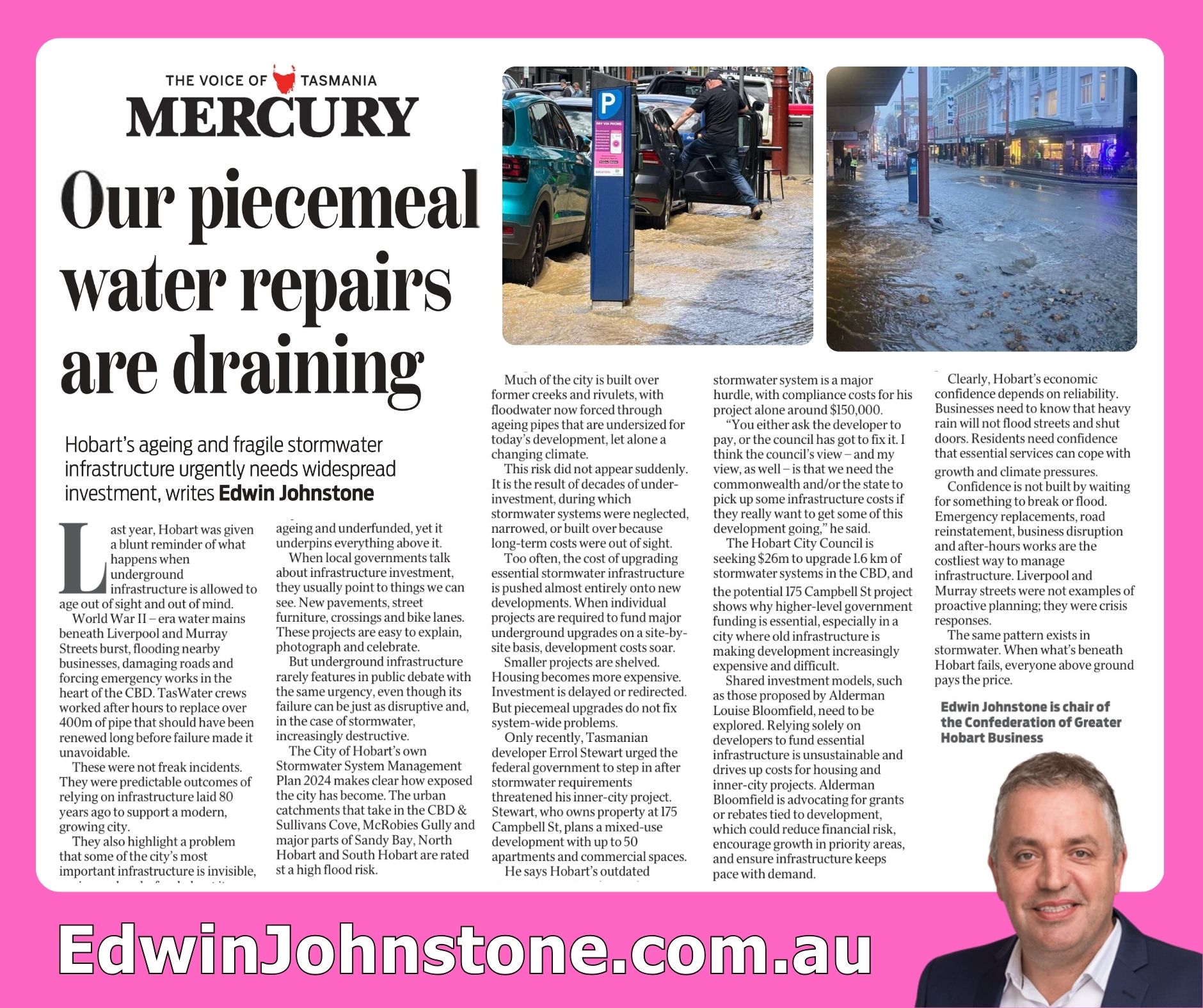
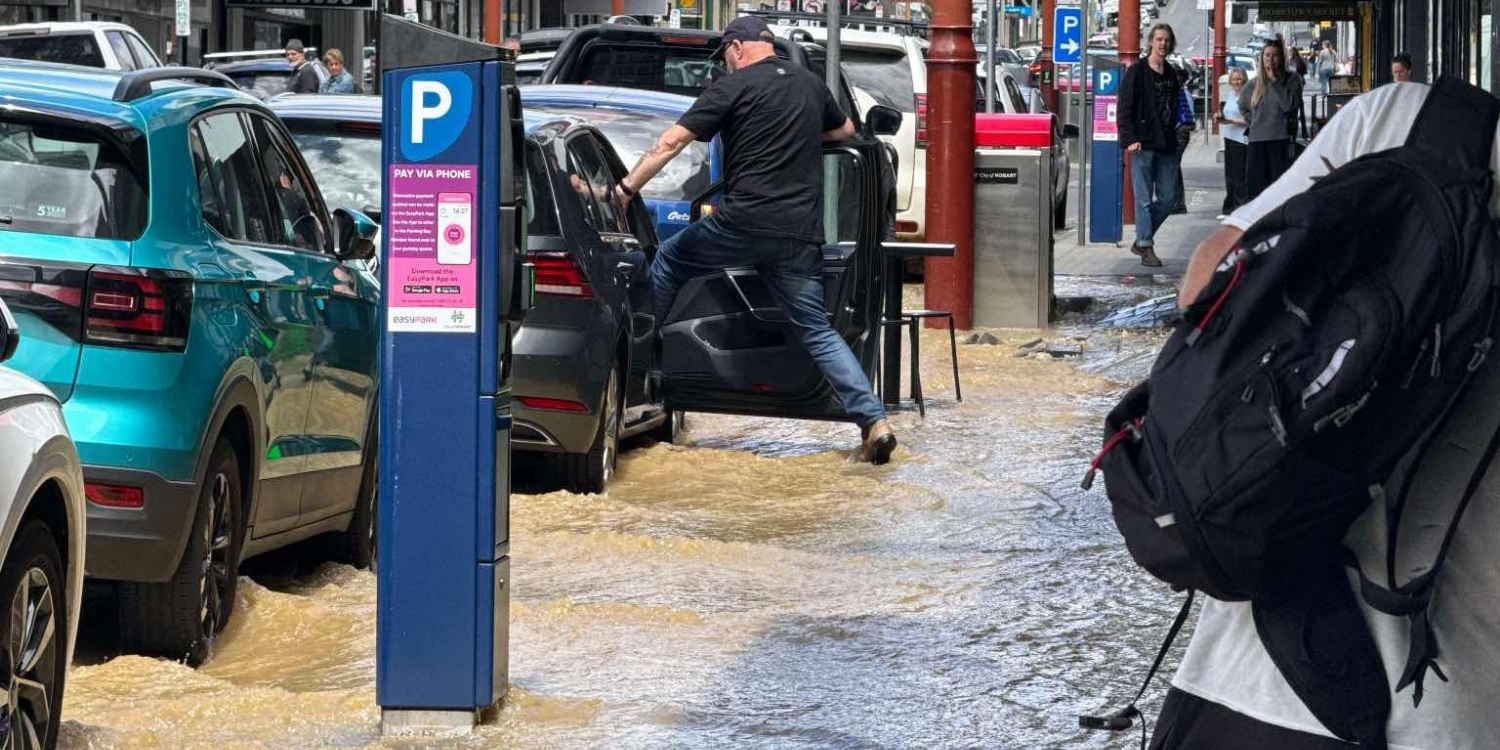
World War II – era water mains beneath Liverpool and Murray Streets burst, flooding nearby businesses, damaging roads and forcing emergency works in the heart of the CBD. TasWater crews worked after hours to replace over 400m of pipe that should have been renewed long before failure made it unavoidable.
These were not freak incidents. They were predictable outcomes of relying on infrastructure laid 80 years ago to support a modern, growing city. They also highlight a problem that some of the city’s most important infrastructure is invisible, ageing and underfunded, yet it underpins everything above it.
When local governments talk about infrastructure investment, they usually point to things we can see. New pavements, street furniture, crossings and bike lanes. These projects are easy to explain, photograph and celebrate.
But underground infrastructure rarely features in public debate with the same urgency, even though its failure can be just as disruptive and, in the case of stormwater, increasingly destructive.
The City of Hobart’s own Stormwater System Management Plan 2024 makes clear how exposed the city has become. The urban catchments that take in the CBD & Sullivans Cove, McRobies Gully and major parts of Sandy Bay, North Hobart and South Hobart are rated st a high flood risk.
Much of the city is built over former creeks and rivulets, with floodwater now forced through ageing pipes that are undersized for today’s development, let alone a changing climate.
This risk did not appear suddenly. It is the result of decades of underinvestment, during which stormwater systems were neglected, narrowed, or built over because long-term costs were out of sight.
Too often, the cost of upgrading essential stormwater infrastructure is pushed almost entirely onto new developments. When individual projects are required to fund major underground upgrades on a site-by-site basis, development costs soar.
Smaller projects are shelved. Housing becomes more expensive. Investment is delayed or redirected. But piecemeal upgrades do not fix system-wide problems.
Only recently, Tasmanian developer Errol Stewart urged the federal government to step in after stormwater requirements threatened his inner-city project. Stewart, who owns property at 175 Campbell St, plans a mixed-use development with up to 50 apartments and commercial spaces. He says Hobart’s outdated stormwater system is a major hurdle, with compliance costs for his project alone around $150,000.
“You either ask the developer to pay, or the council has got to fix it. I think the council’s view – and my view, as well – is that we need the commonwealth and/or the state to pick up some infrastructure costs if they really want to get some of this development going,” he said.
The Hobart City Council is seeking $26m to upgrade 1.6 km of stormwater systems in the CBD, and the potential 175 Campbell St project shows why higher-level government funding is essential, especially in a city where old infrastructure is making development increasingly expensive and difficult.
Shared investment models, such as those proposed by Alderman Louise Bloomfield, need to be explored. Relying solely on developers to fund essential infrastructure is unsustainable and drives up costs for housing and inner-city projects. Alderman Bloomfield is advocating for grants or rebates tied to development, which could reduce financial risk, encourage growth in priority areas, and ensure infrastructure keeps pace with demand.
Clearly, Hobart’s economic confidence depends on reliability. Businesses need to know that heavy rain will not flood streets and shut doors. Residents need confidence that essential services can cope with growth and climate pressures.
Confidence is not built by waiting for something to break or flood. Emergency replacements, road reinstatement, business disruption and after-hours works are the costliest way to manage infrastructure. Liverpool and Murray streets were not examples of proactive planning; they were crisis responses.
The same pattern exists in stormwater. When what’s beneath Hobart fails, everyone above ground pays the price.
Edwin Johnstone is chair of the Confederation of Greater Hobart Business